Project Musings
I’ve found it difficult to come up with articles to write about vibe-coded projects. A lot of my motivation and excitement to explain a piece of software comes from my love of the code— this whole blog was started to give me a place to talk more about how my code works after enjoying that in my rcade documentation project. With that gone (the nuance and structure of code really isn’t a relevant part of vibe development), I’m left with… the software itself, and the story of how I made it.
But that story isn’t very interesting. Programming often came with excitement and drama— realizing that an approach wouldn’t work, tracking down an insidiously hidden bug1— and those sorts of experiences were what made development memorable. Now it’s just “hey Claude, this doesn’t work, take a look and try to fix it.” The whole personal attachment is gone.
And the software itself? Yeah, it’s valuable to have a human write about how to use it (AI can’t experience UX, sort of), but that kind of thing belongs in the readme, not a blog.
So anyway, here’s one of the more interesting things I made this month. I’ve continued to pursue neat projects, but they just haven’t felt as meaningful… and I haven’t had much inspiration to write. Tough times.
The Web-Bayan
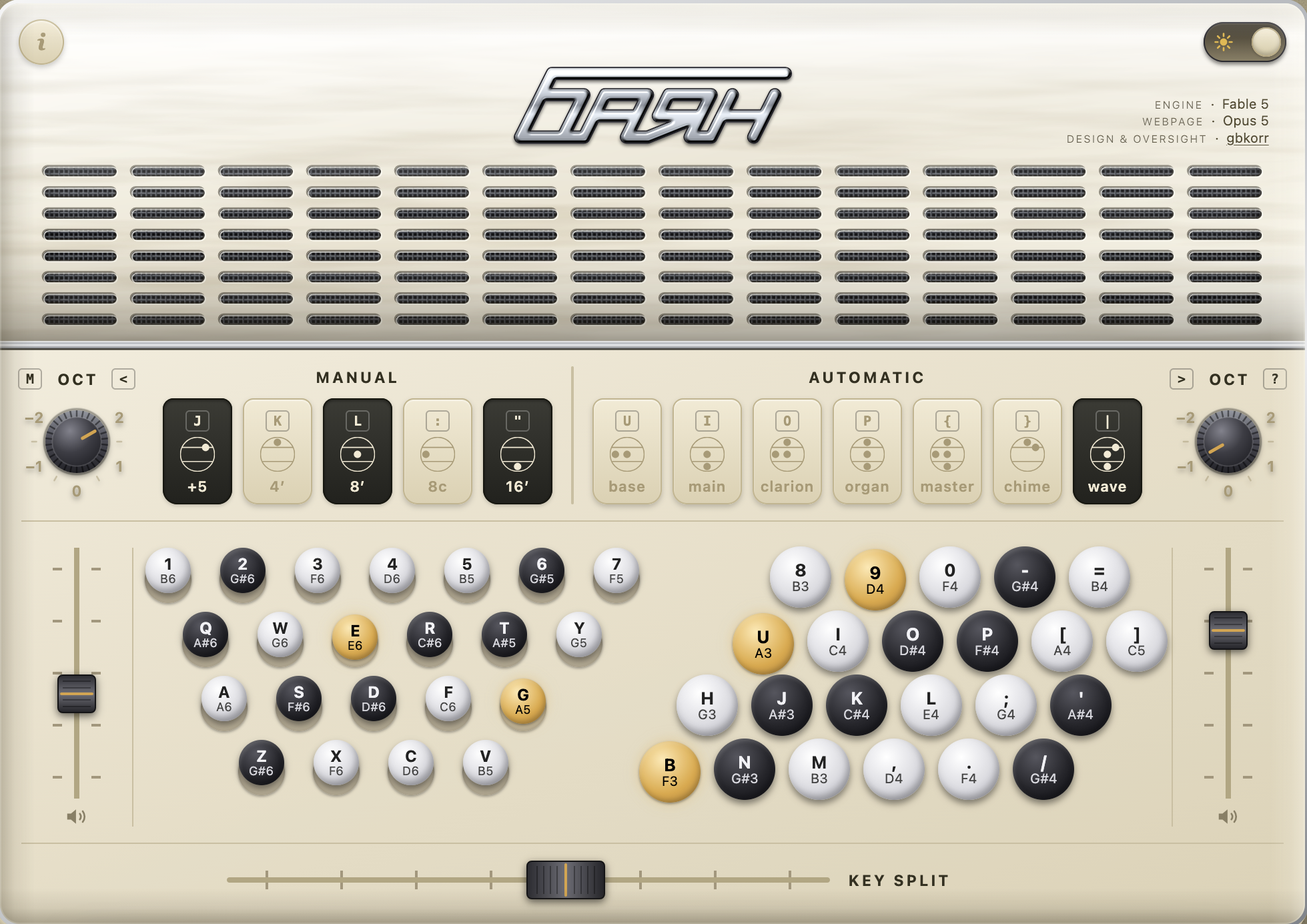
I’d been listening to a lot of bayan accordion music this summer and had the idea to practive UI/UX/web vibe development by making a website that simulates the interface of the instrument. This would have the added benefit of giving me some practice and enjoyment playing the instrument before I buy one. I’d always wanted to make some web interfaces for instruments (I have a lot of world instrument experience), but never had the synthesizing background to make it happen.
Unlike most European accordions, the bayan uses a button layout (far superior, imo) rather than a piano keyboard, and it happens to be organized with a stagger very similar to a computer keyboard. Making a website interface for a button accoridon isn’t a new idea2,3, but I figured that with the power of vibe coding I could make a better one. Besides, those were regular old chromatic accordions— not bayans! The differentiating factor ended up being that I included a free bass system for the left hand, and I think my website has better polish/UX/timbre.
Developing this was an interesting process— I intentionally chose a hands-off approach where I made Claude do all the technical work, and kept my role as purely the designer. Of course, this involved lots of designing— loads of back-and-forth timbre feedback to get it tuned right, and 90% of the interface was by my own design. Both the sound engine and the web design took a lot of polishing and tweaking to get to my liking. I did the overall layout too— I actually gave Claude a hand-drawn sketch of the layout I wanted, and to my surprise it interpreted it perfectly and even read the wonky, faint handwriting of my labels and notes.
You can try it out here.
Cut/Experimental Features
There are a few features I haven’t really settled on yet.
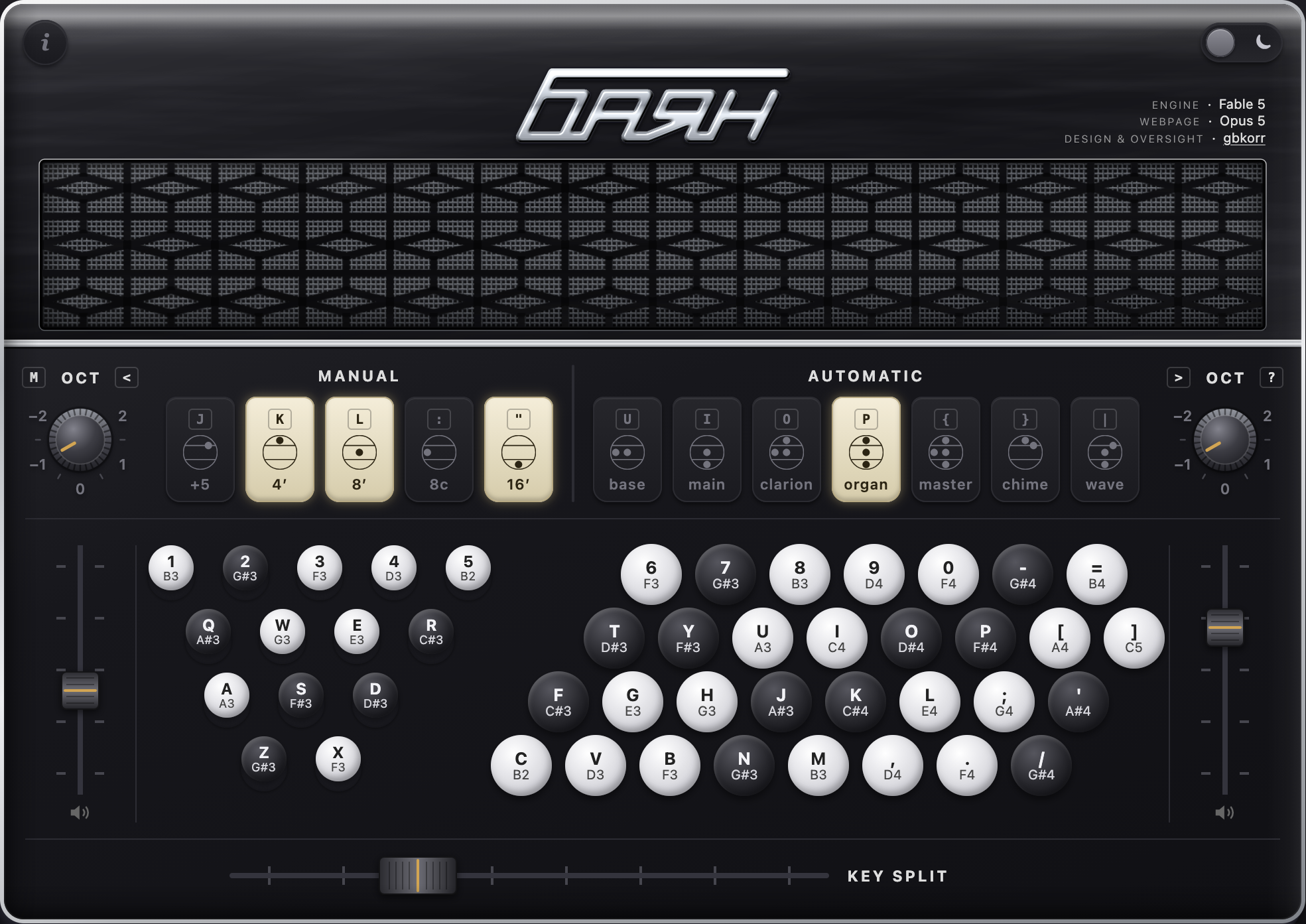
Stradella bass for the left hand: it’s very easy to make the left hand buttons play chords following the traditional modified stradella bass system found on bayans (most of which have a toggle between this mode and the free bass (one note per button) system). Unfortunately I lack the musical experience to test this properly! Chords break my brain. I’ll probably get this system up and running at some point in the future.
Bellows shake and swell: I’ve yet to figure out a good way to control the note dynamics— how loud the instrument is based on how hard the bellows are squeezed. This is where a lot of expression comes from when playing the accordion, so it’s very important— but it’s a very analog and unique technique and I haven’t figured out a good way to simualte it yet.
MIDI playing: I got a fully-featured midi player working that uses a midi file to synthesize the notes and highlights the keys as they’re played. I ended up just not seeing the need for such a feature, and the midis I was using were lackluster. I should probably put it back in, though.
Bass register switches: I should find a way to put these back in. I originally cut them since they added a bit too much user complexity (“how do I know what will sound good?” The melody register switches are already a lot), but the current bass timbre only sounds good with some of the melody registers.